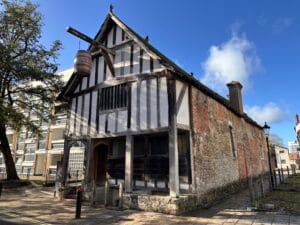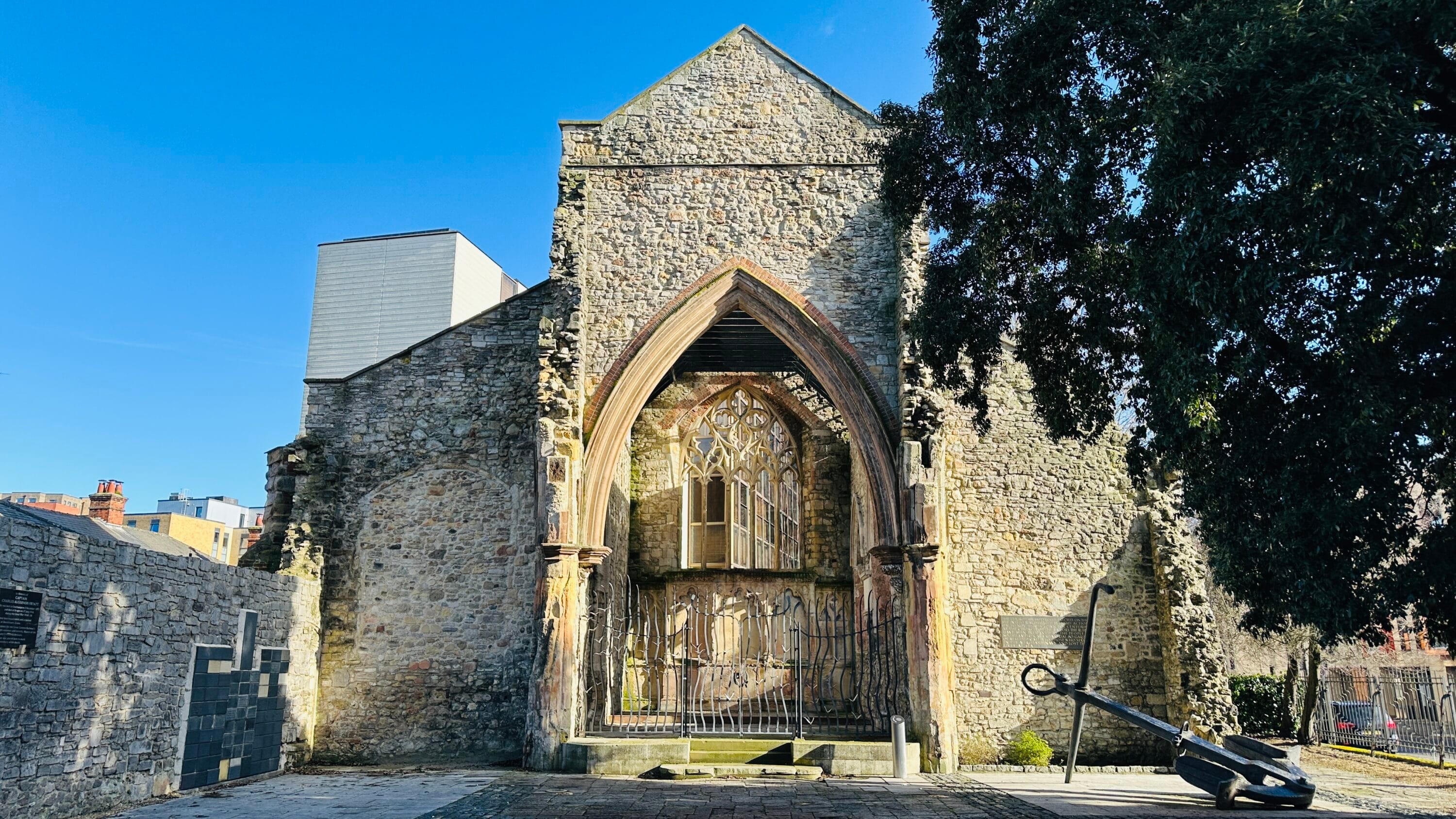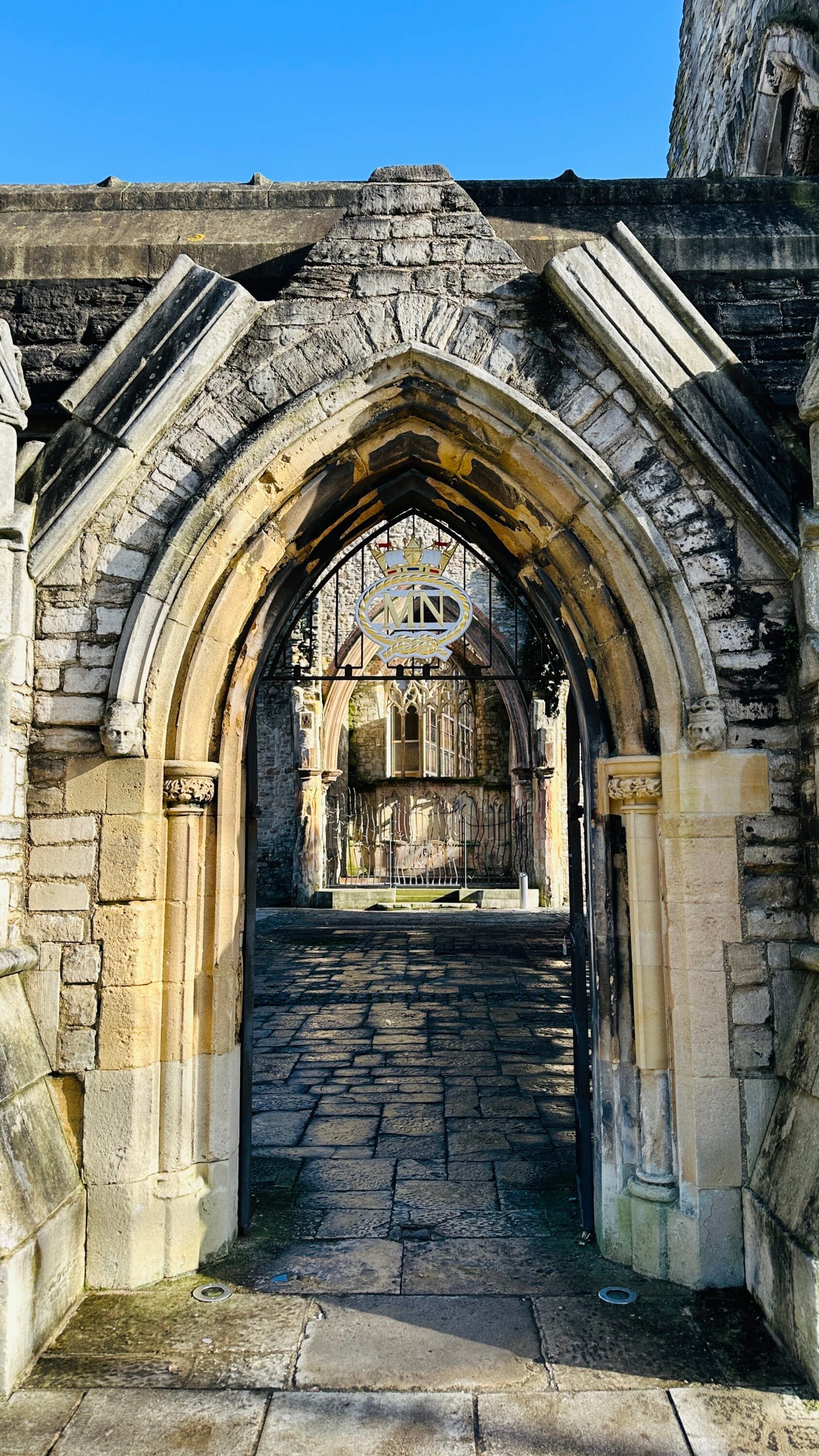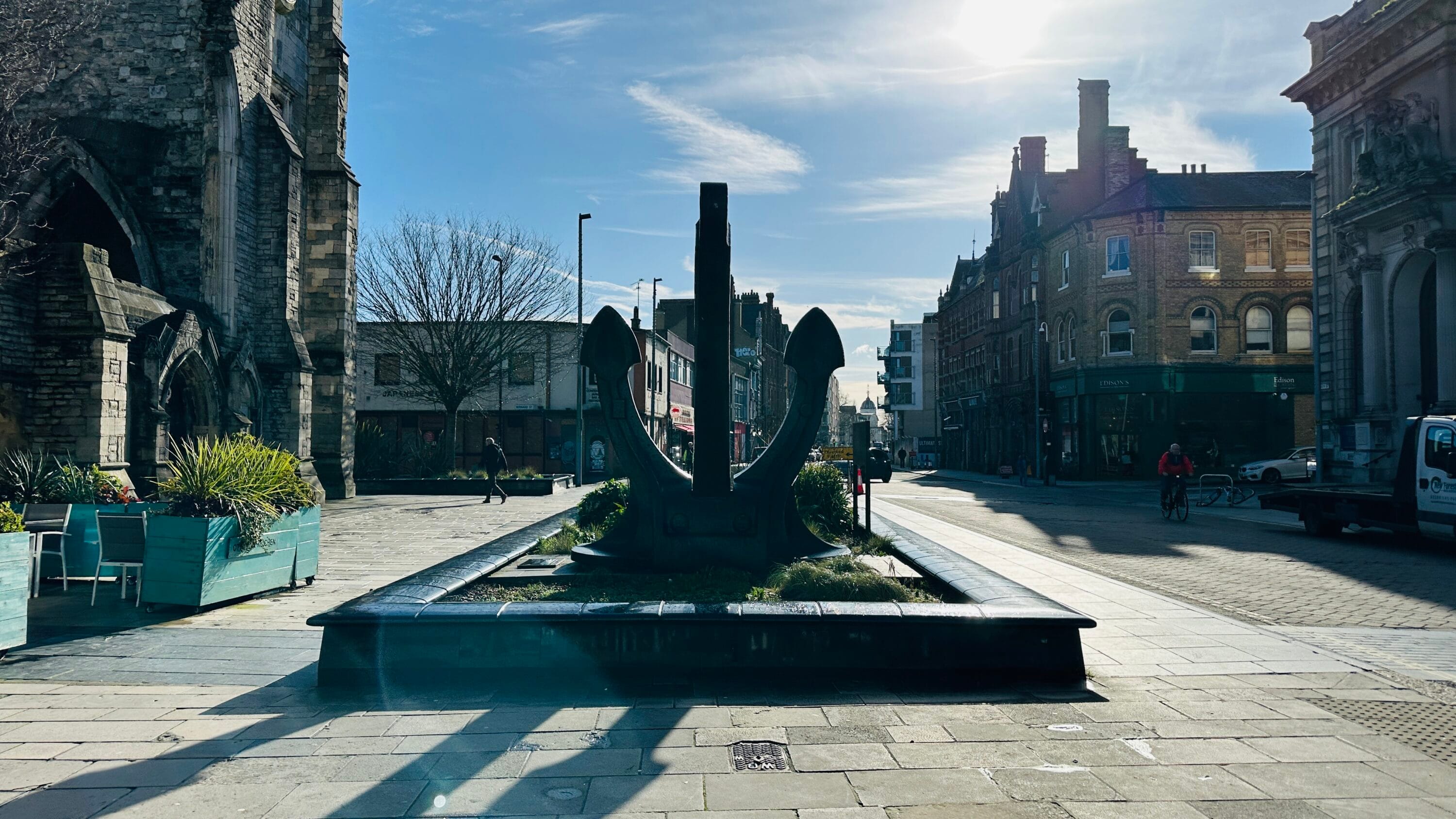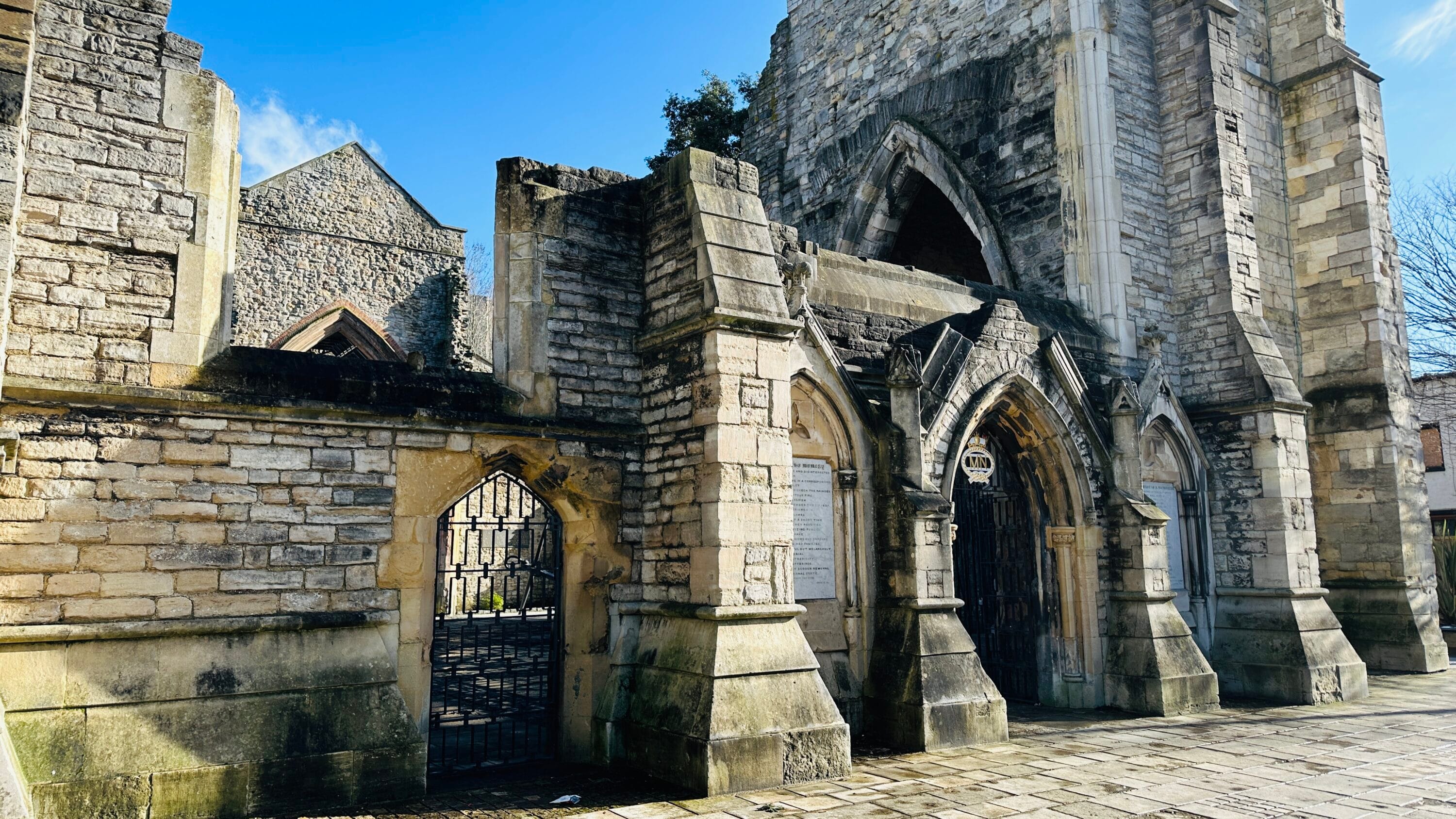
Are you looking for a poignant, historically rich attraction in the city centre where you can step back in time and reflect on the heritage of Southampton? Holyrood Church on the High Street offers a striking, open-air ruin packed with centuries of maritime history where you explore the ancient stone arches and view a dedicated merchant sailors’ memorial.
What is Holyrood Church?
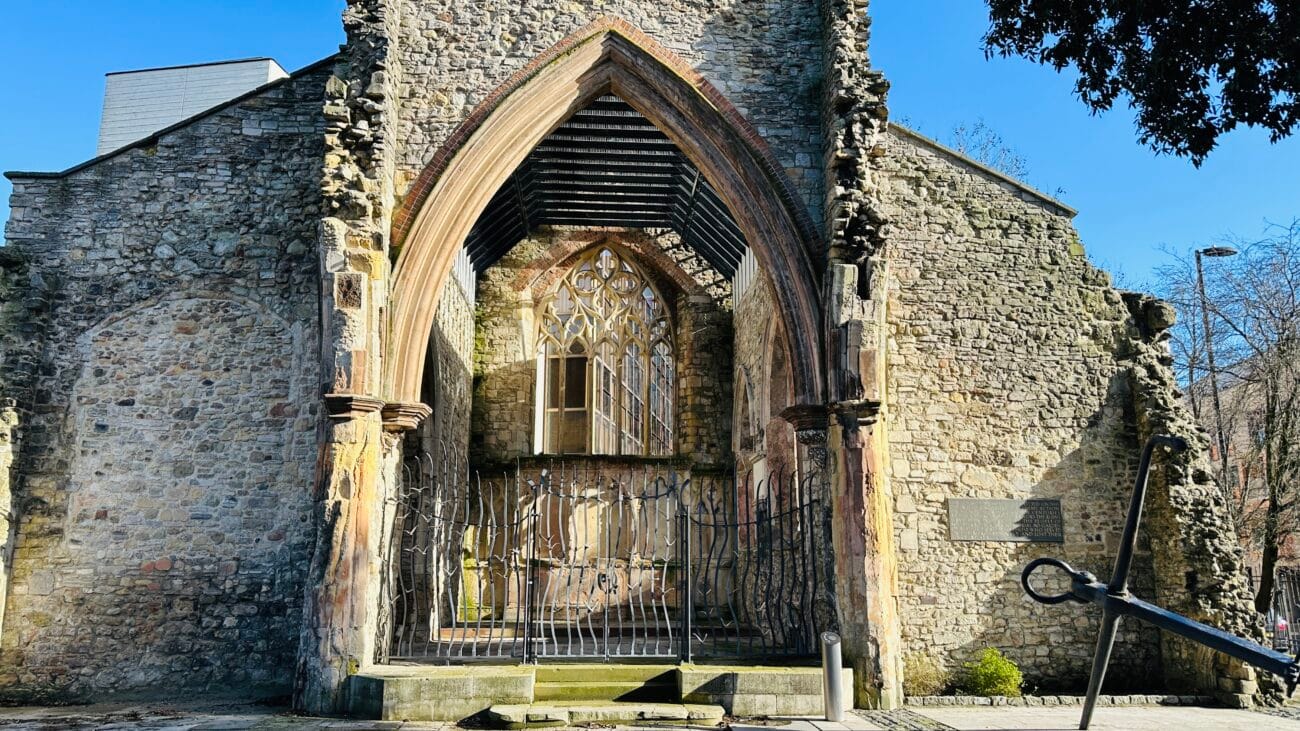
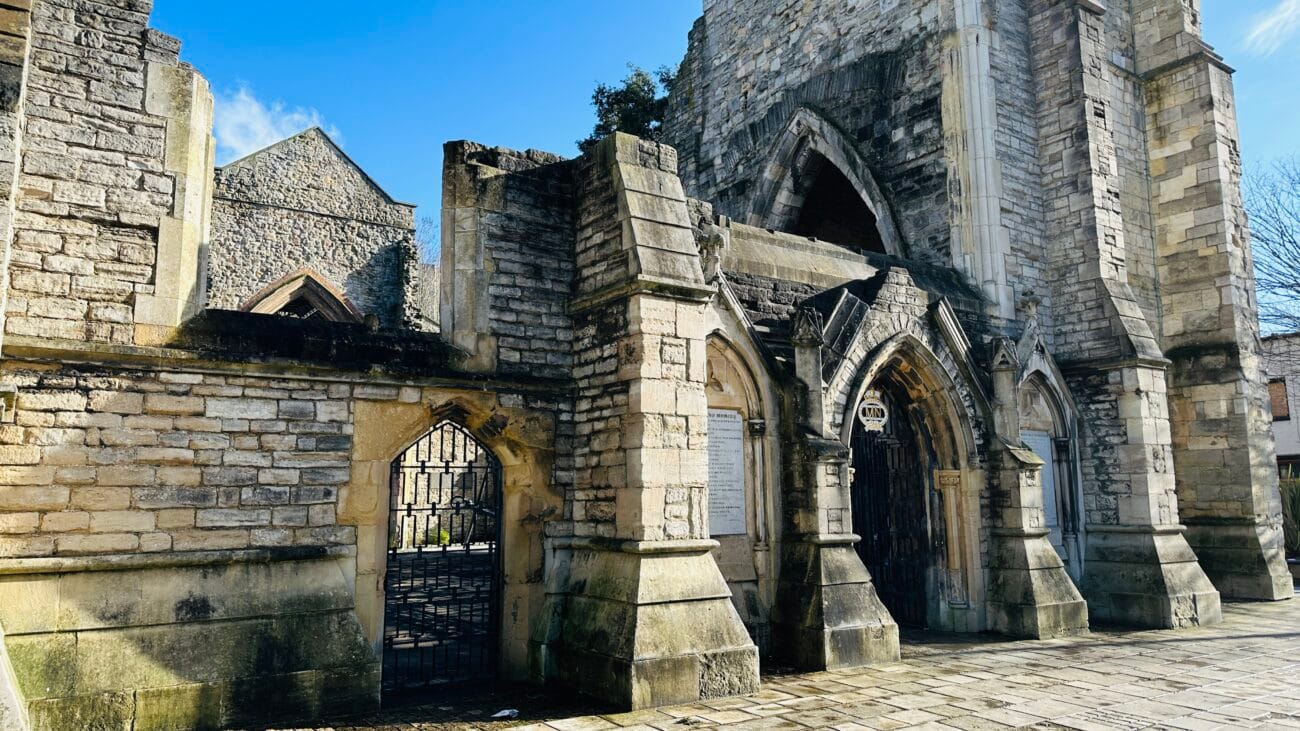
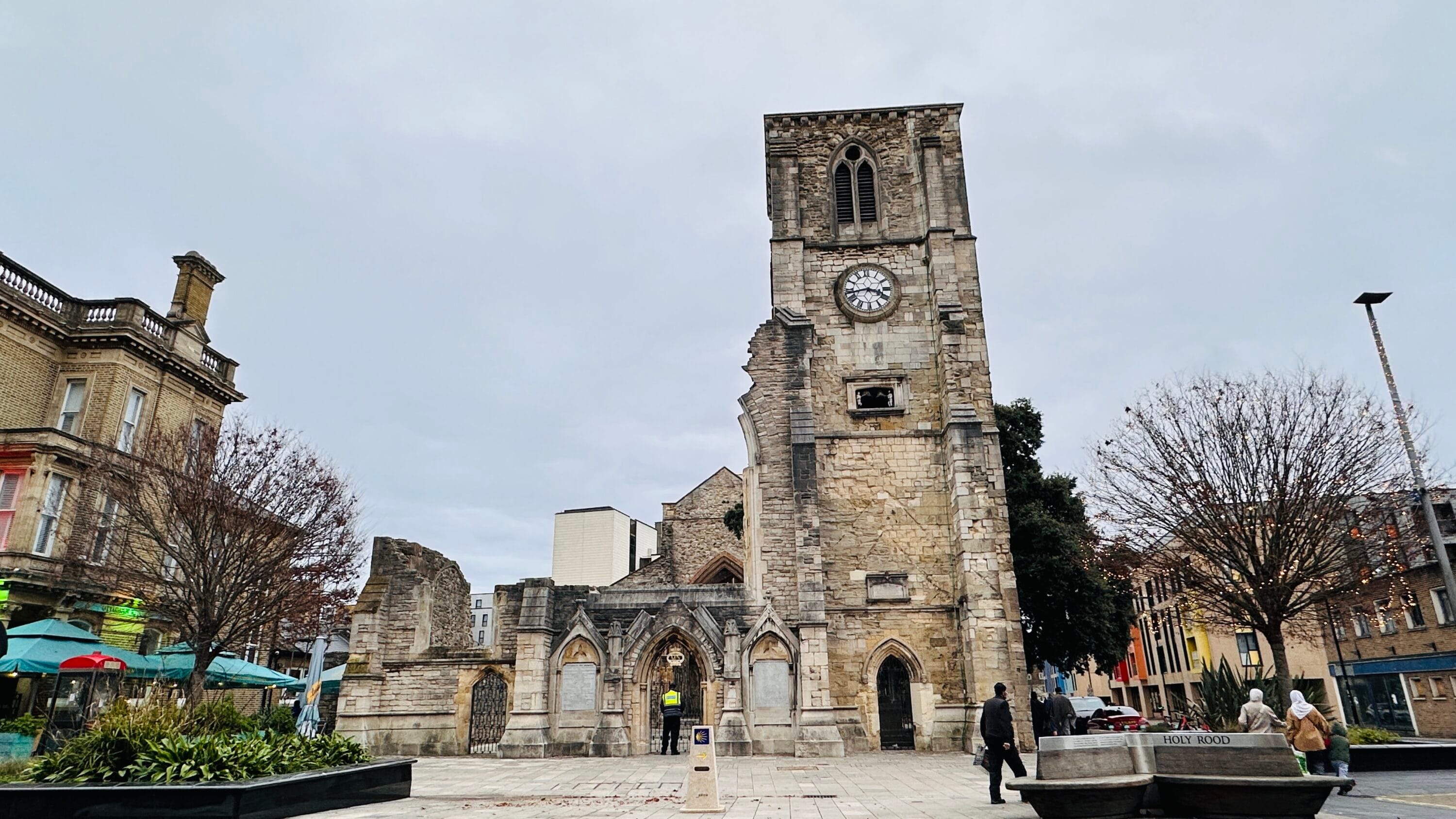
Holyrood Church is a historic open-air monument on the High Street in Southampton city centre, where you can explore the remnants of a 14th-century church preserved as a monument to fallen sailors.
- How it works: It is a completely open-access heritage site where you walk through the surviving stone walls, reading historical plaques that explain how the church was destroyed during air raids.
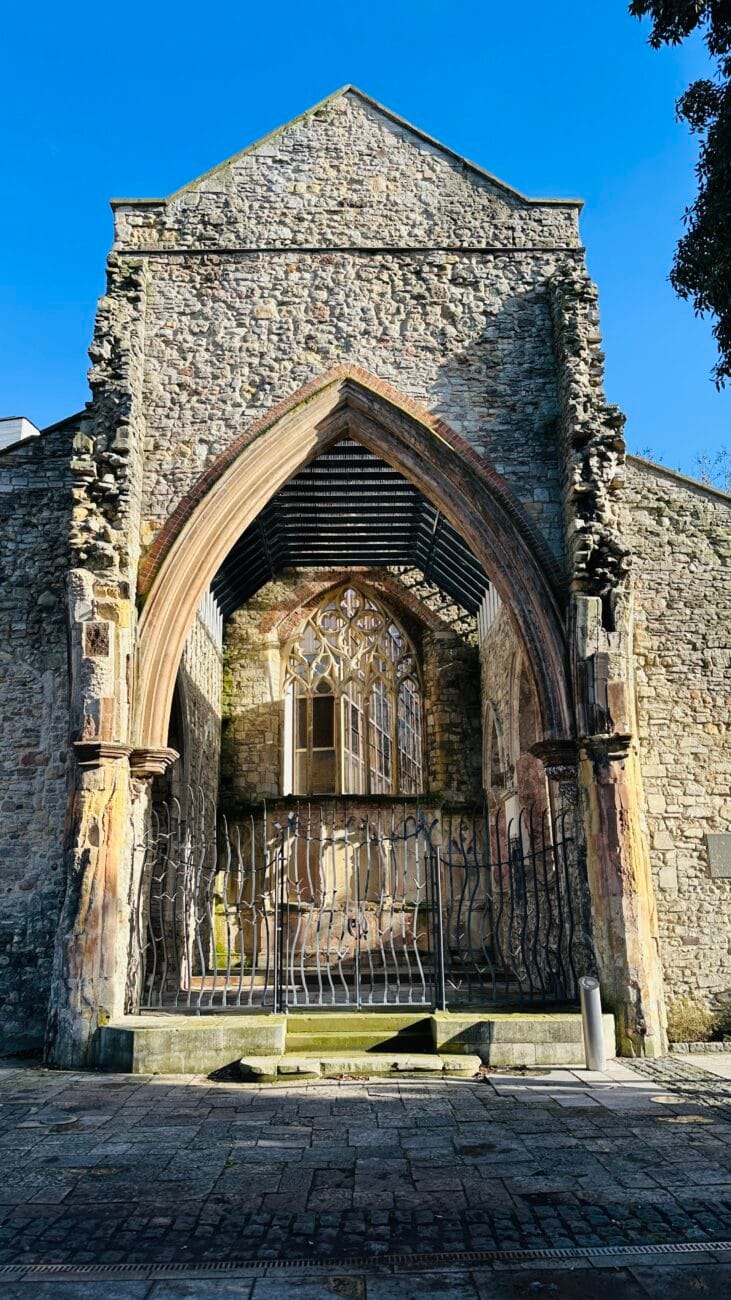
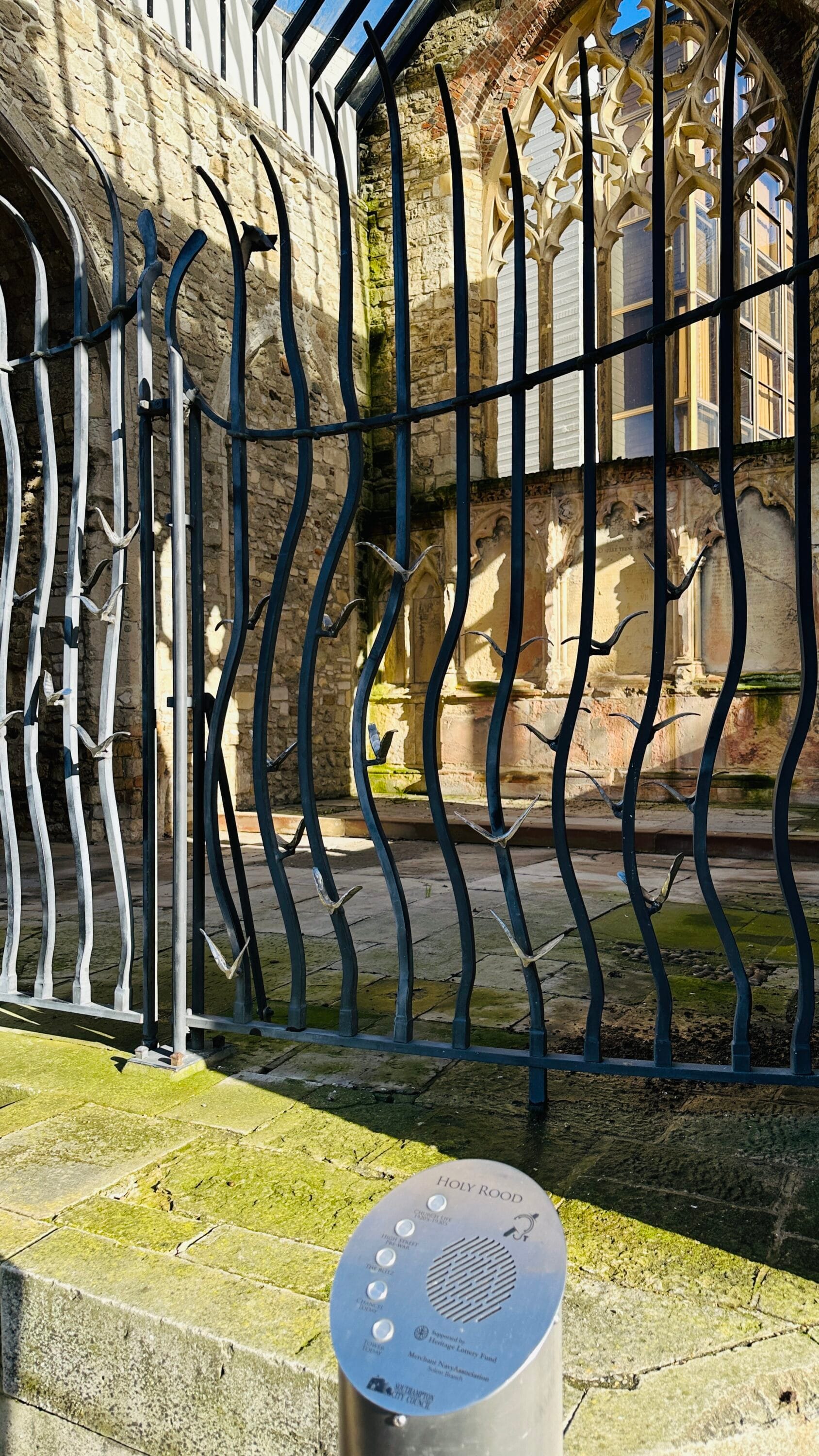
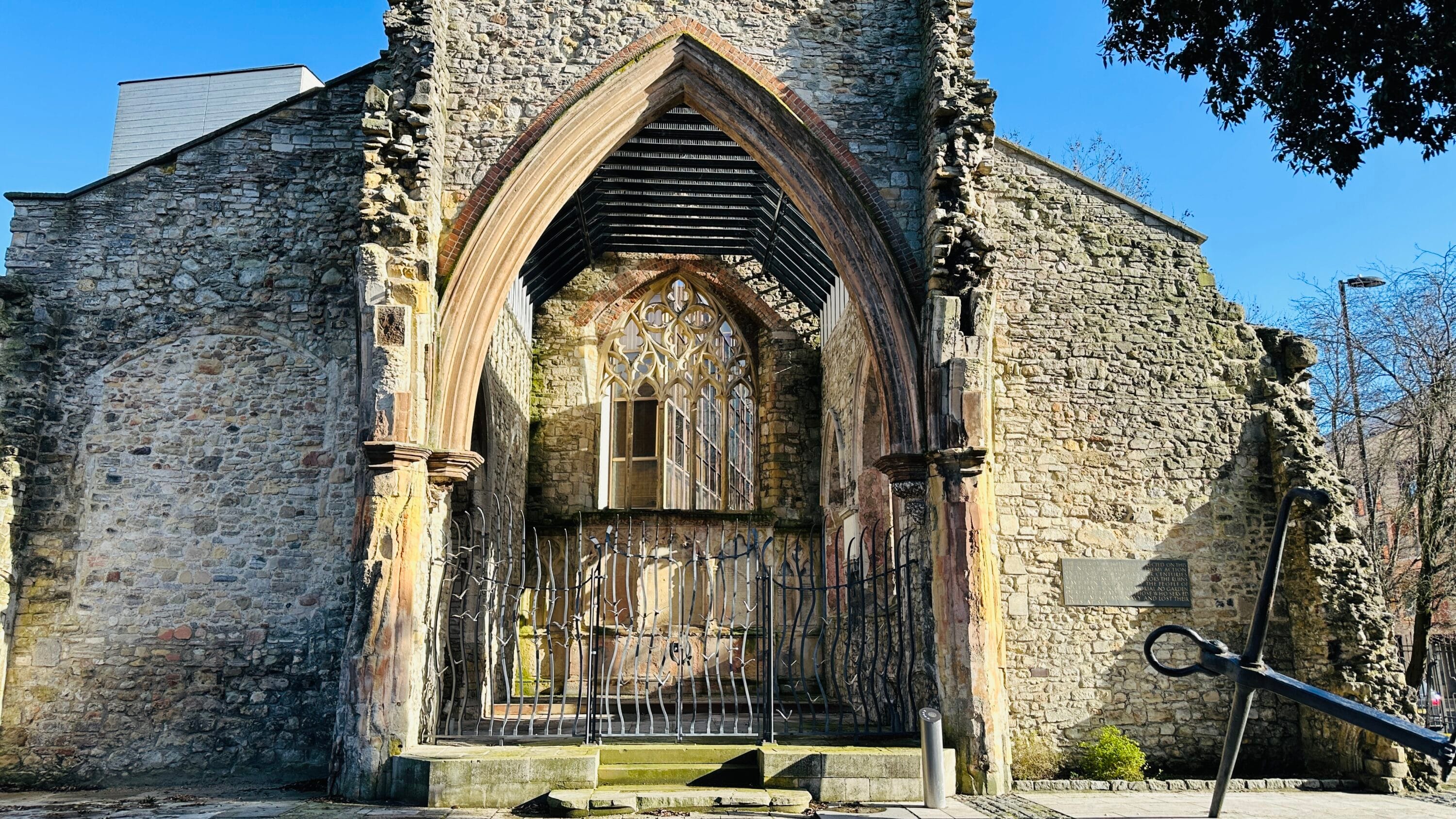
- Why people love it: It is a powerful place for quiet reflection because the roofless sanctuary lets you view the open sky through grand gothic windows right in the middle of a bustling modern street.
- Who can go: The monument is fully open to the public, making it perfect for casual strolls, educational family visits, or anyone wanting to discover the medieval architecture of the city.
Is Holyrood Church Worth Visiting?
If you are looking for meaningful historical sights in Southampton, Holyrood Church is easy to recommend. The striking juxtaposition of medieval ruin against modern city buildings makes it excellent value for anyone doing a self-guided walking tour.
★★☆☆☆
The somber, memorial nature of the roofless church means it is not a venue for lively birthday parties or group social gatherings.
★★★★★
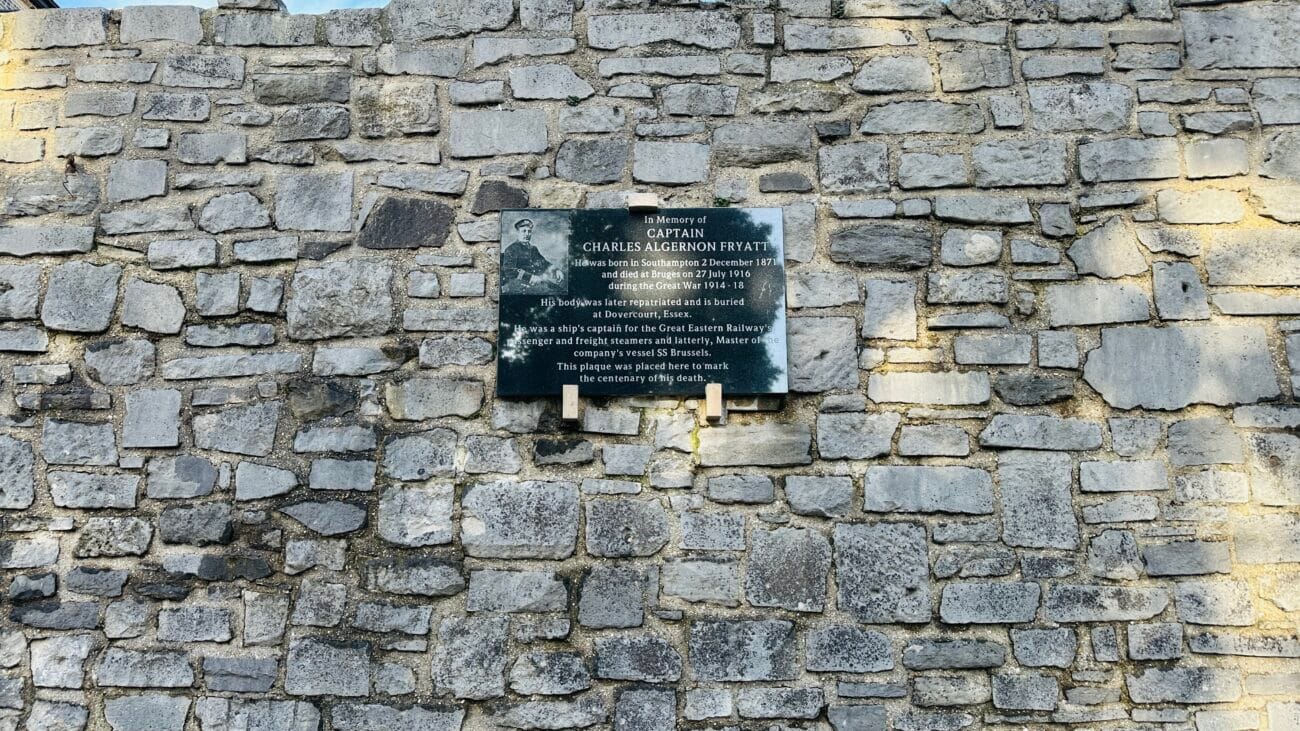
Historians thoroughly enjoy exploring the 1331 architecture, the Blitz survival story, and viewing genuine maritime memorial plaques.
★★★☆☆
While it lacks digital gaming, the haunting aesthetic makes it a popular atmospheric spot for photography and local history projects.
★★★★☆
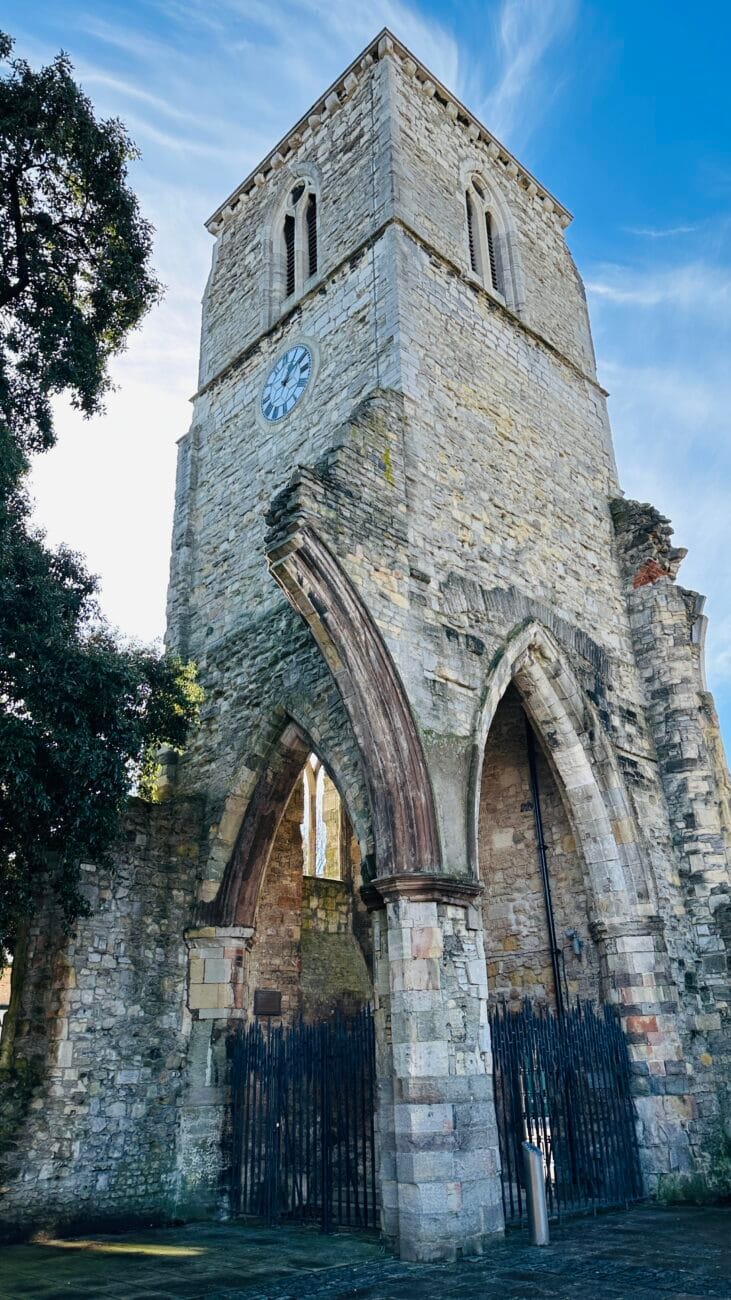
Children enjoy investigating the old stone ruins and the clock tower, making it a quick, interesting educational stop.
★★★☆☆
Couples searching for a quiet, scenic walk can appreciate the unique romantic atmosphere of the ruins before heading to nearby restaurants.
Overall, Holyrood Church is one of the best heritage attractions in Southampton and offers a profound historical experience compared with standard tourist spots.
What Can You See at Holyrood Church?
Visiting the church is a highly atmospheric experience that connects you directly to medieval and wartime history. The open layout highlights the resilience of the city structure.
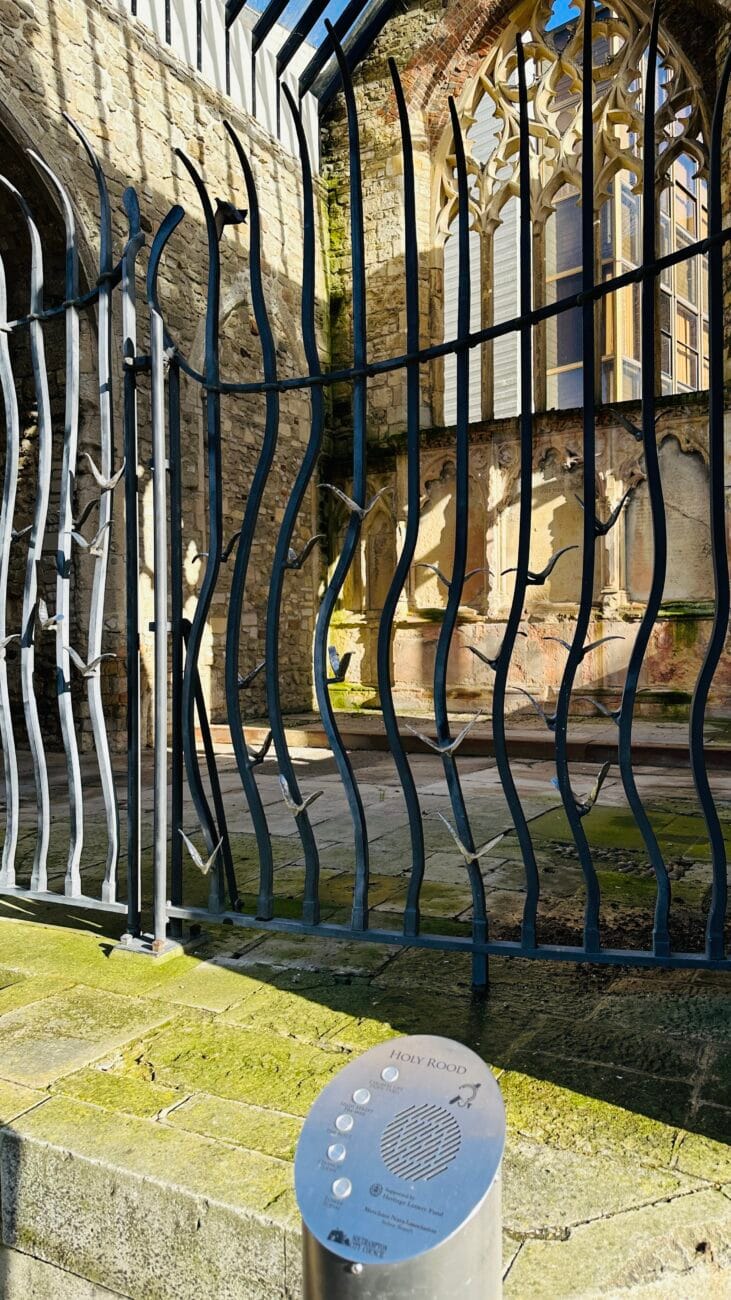
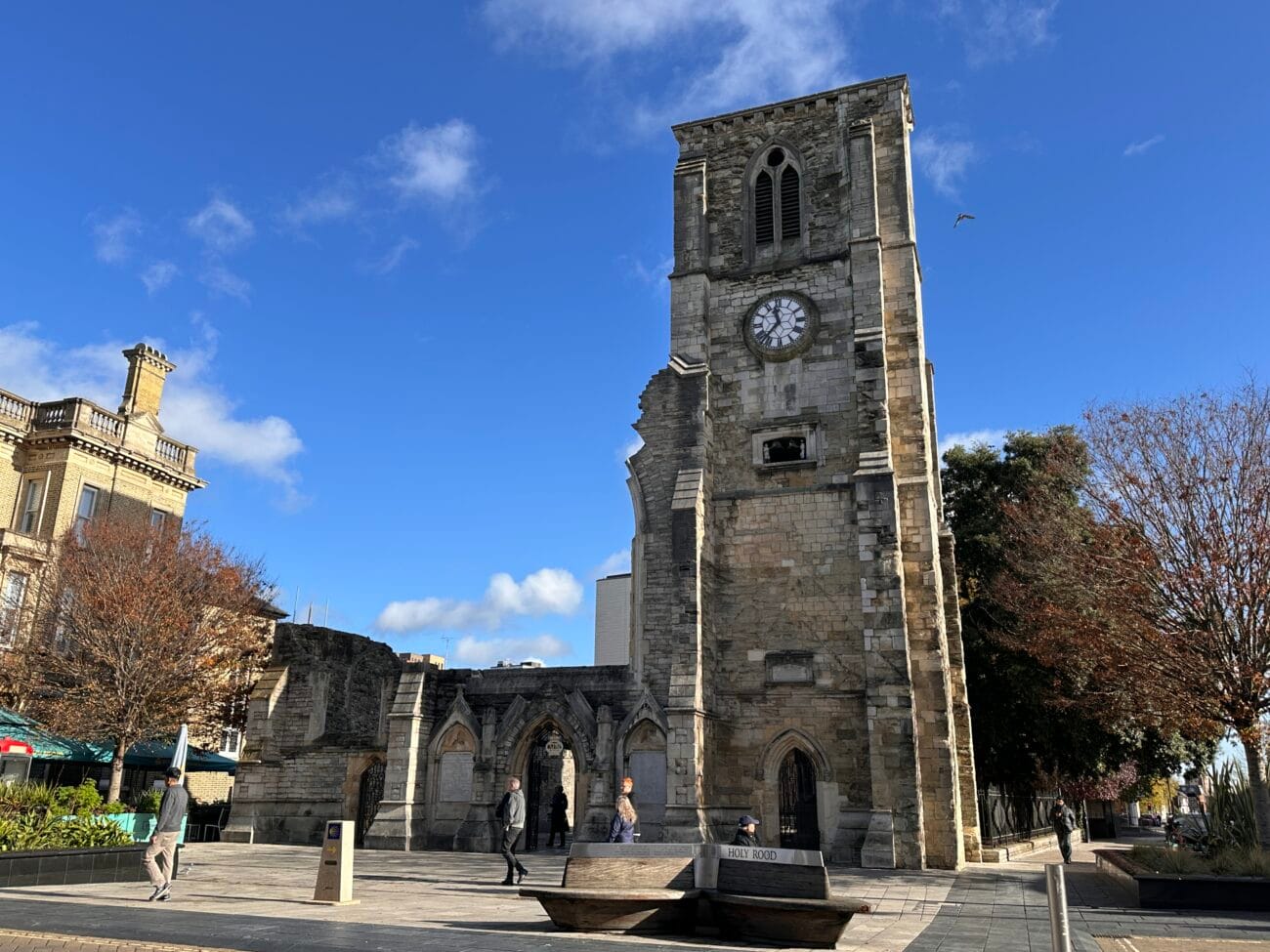
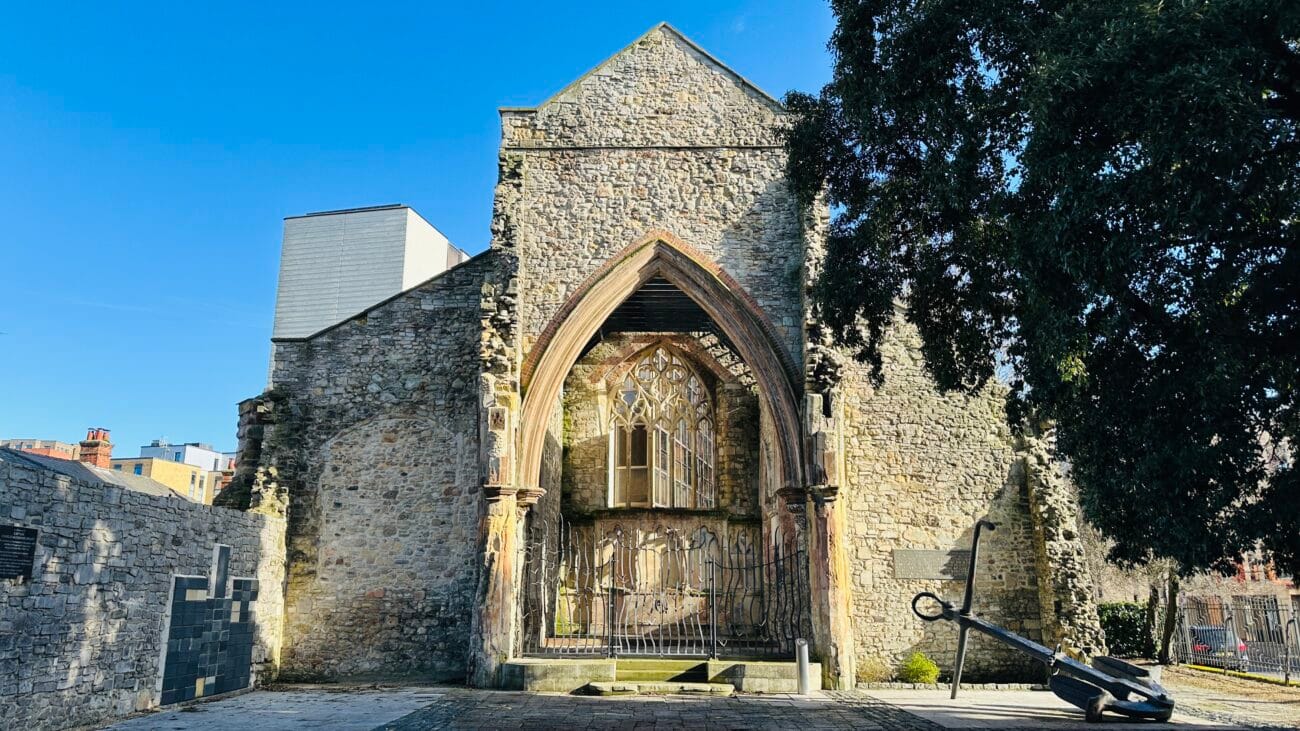
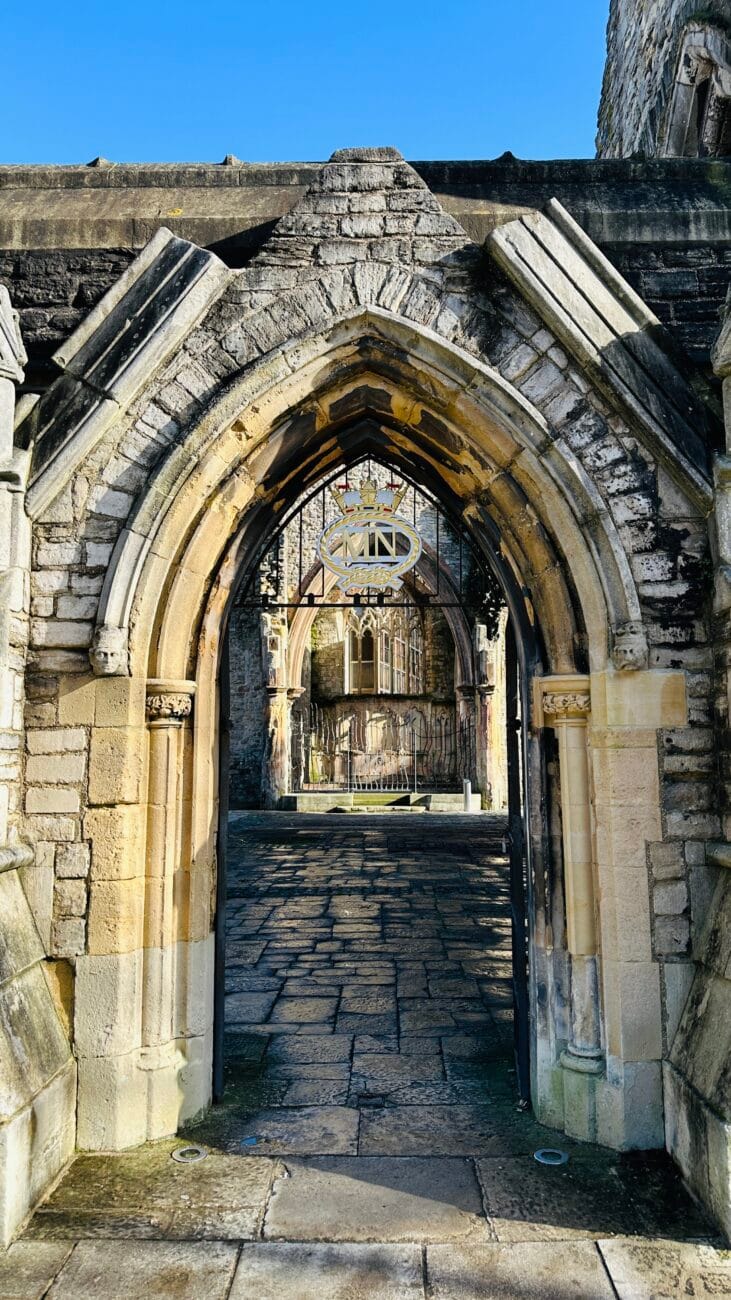
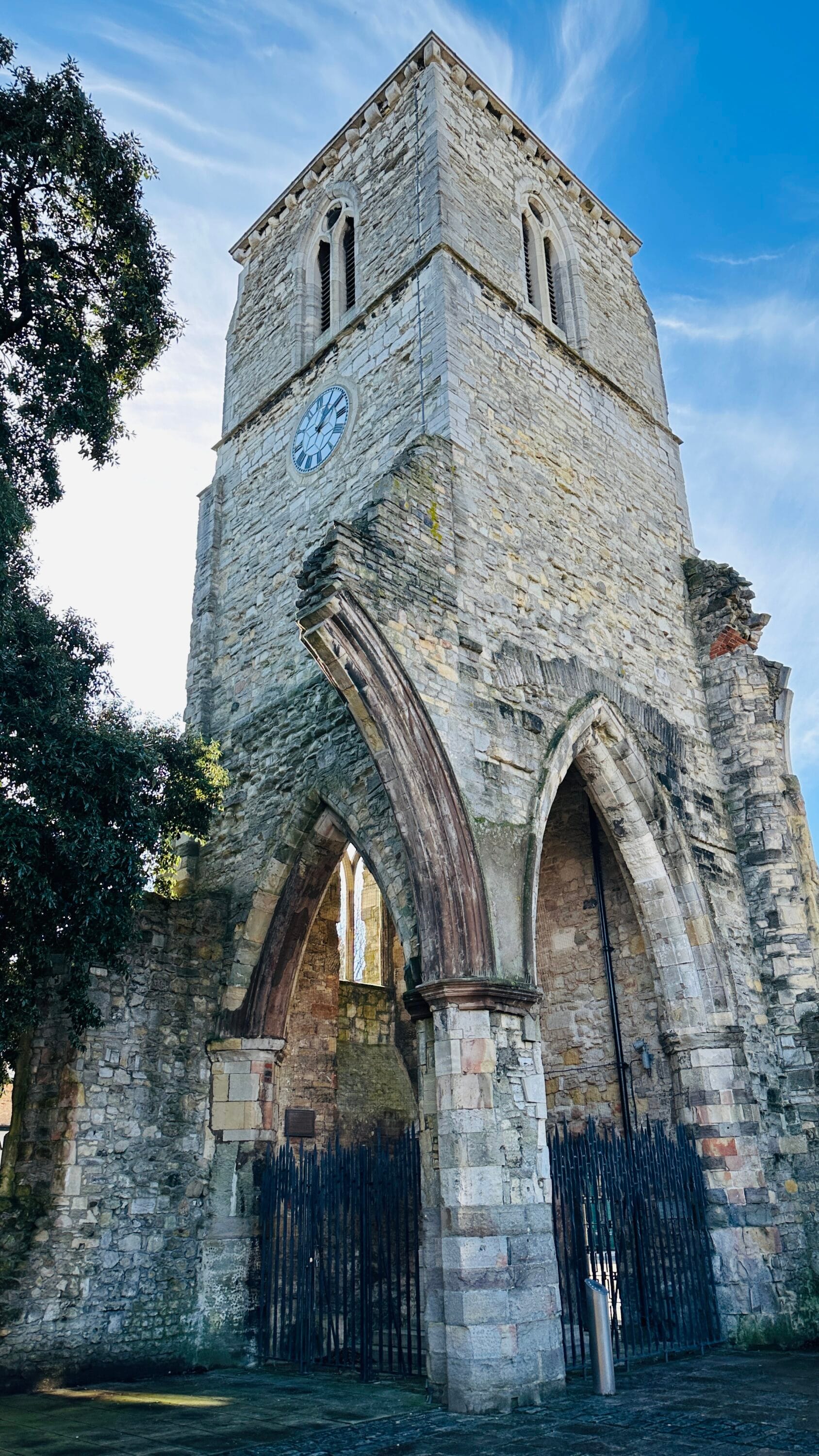
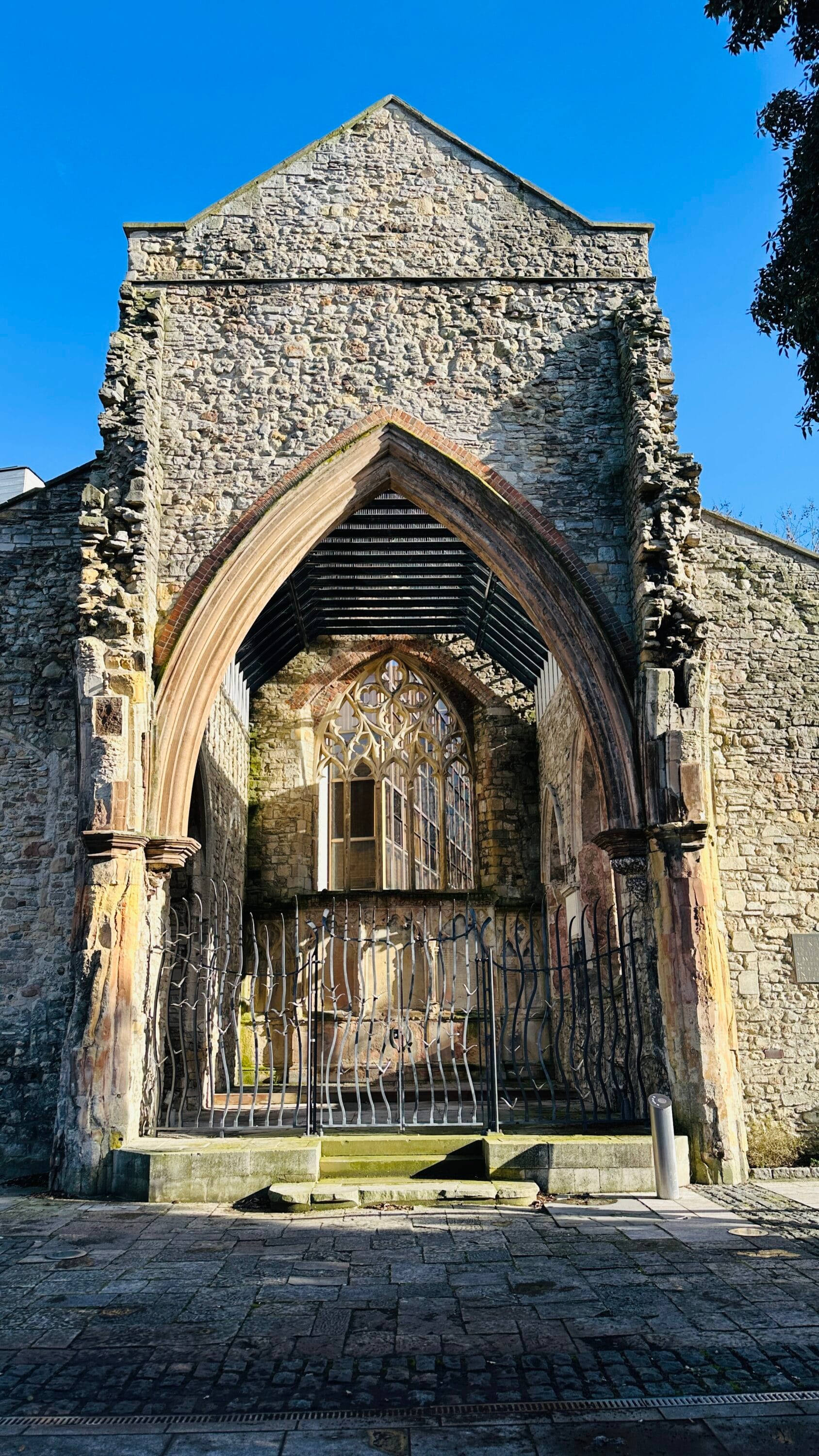
- The Roofless Nave: You can stand inside the main body of the 14th-century church where the missing roof creates an impressive open-air courtyard surrounded by towering stone arches.
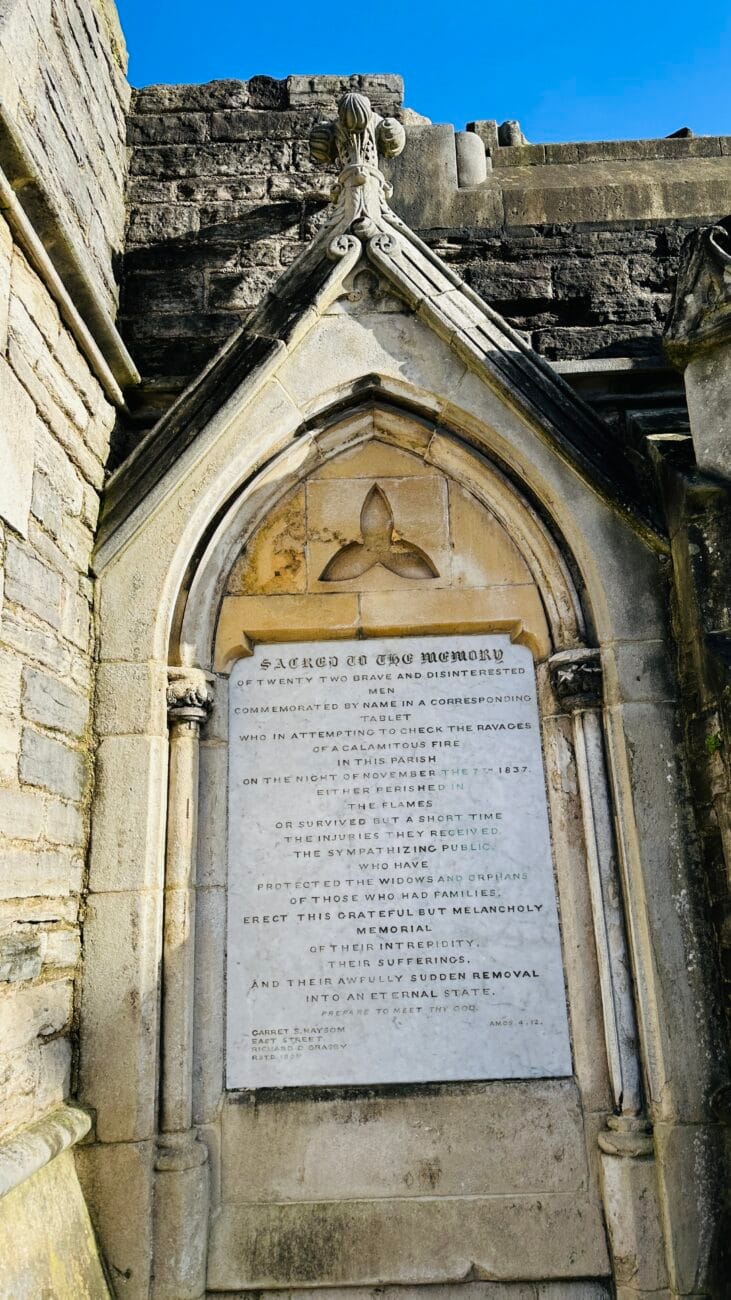
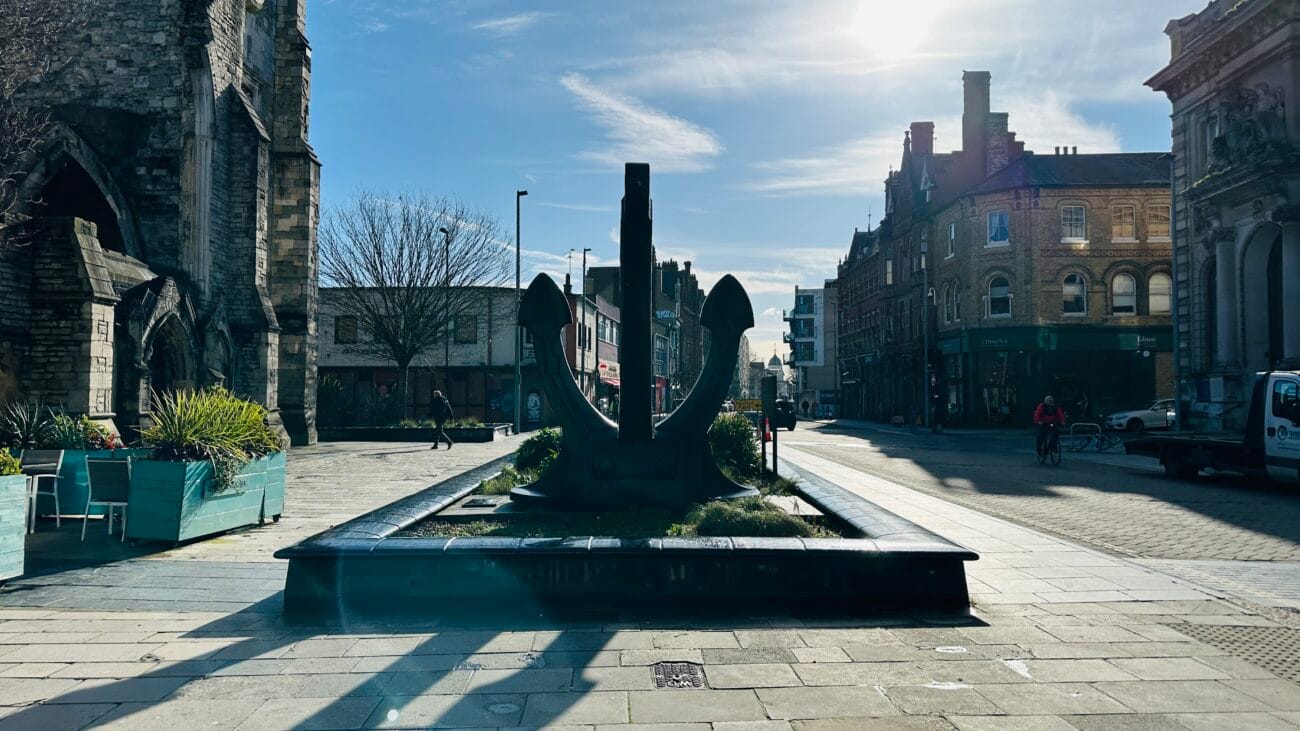
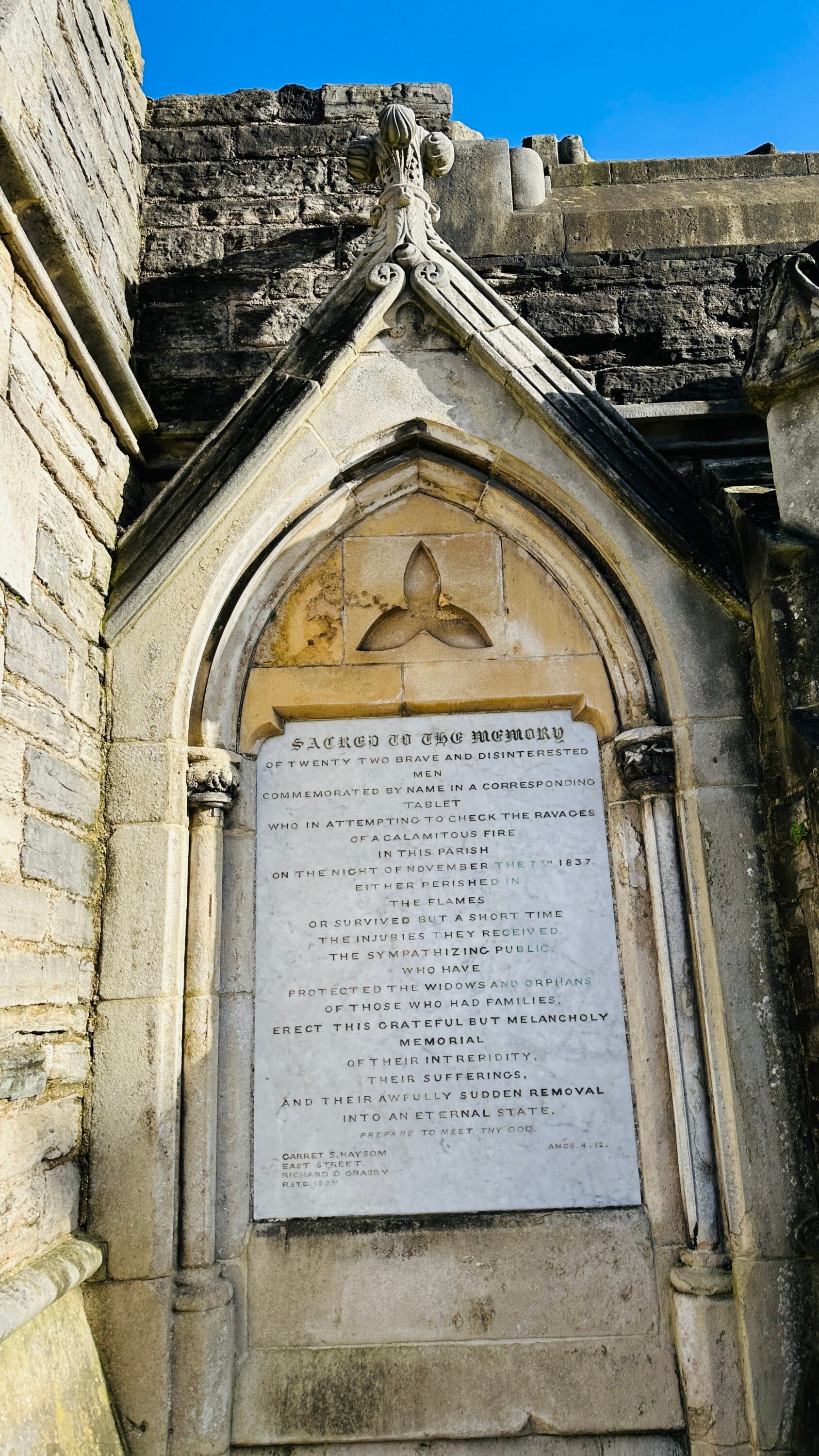
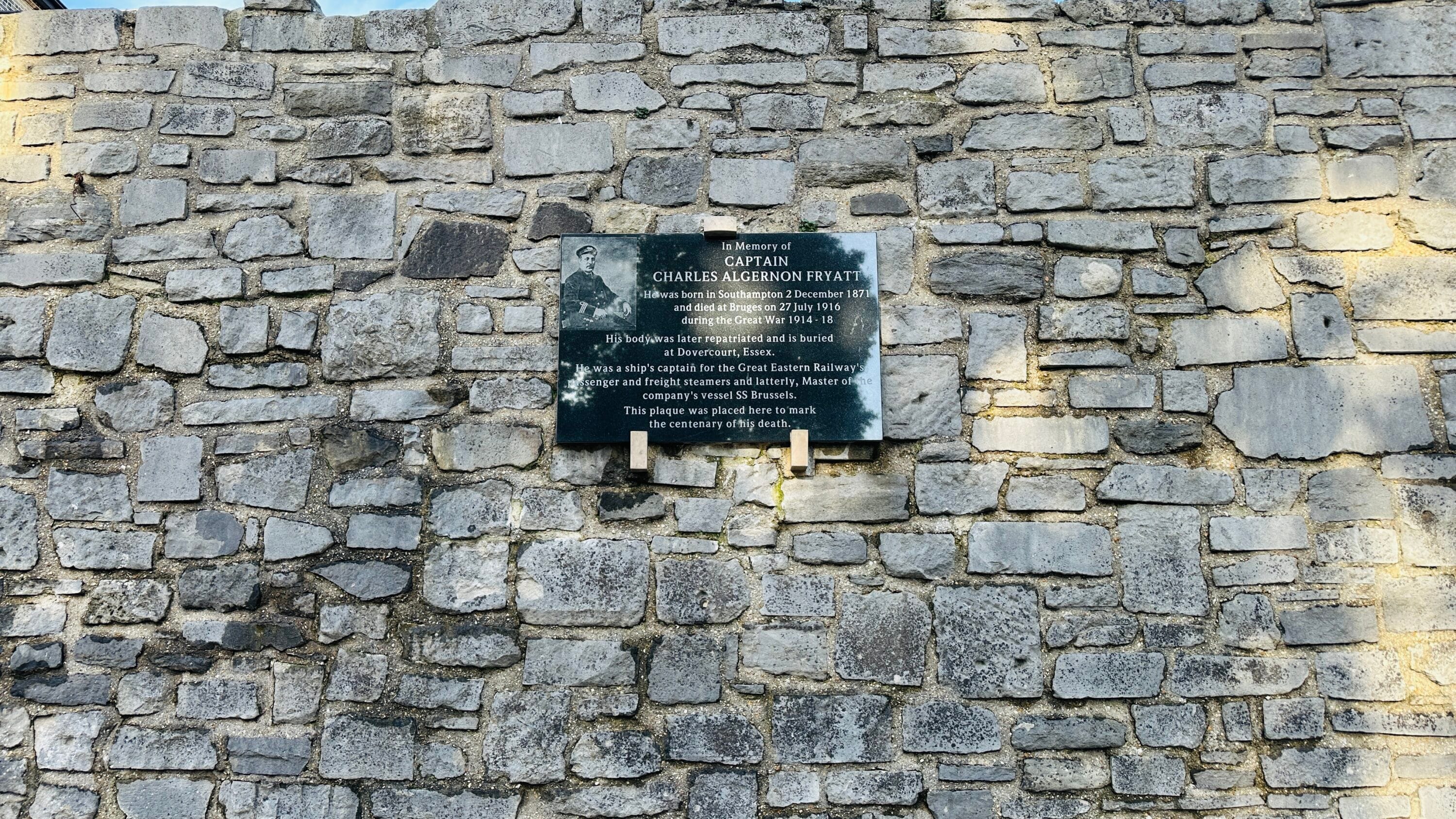
- The Merchant Navy Memorial: The chancel houses a dedicated anchor monument and plaques honouring the brave sailors who lost their lives at sea during global conflicts.
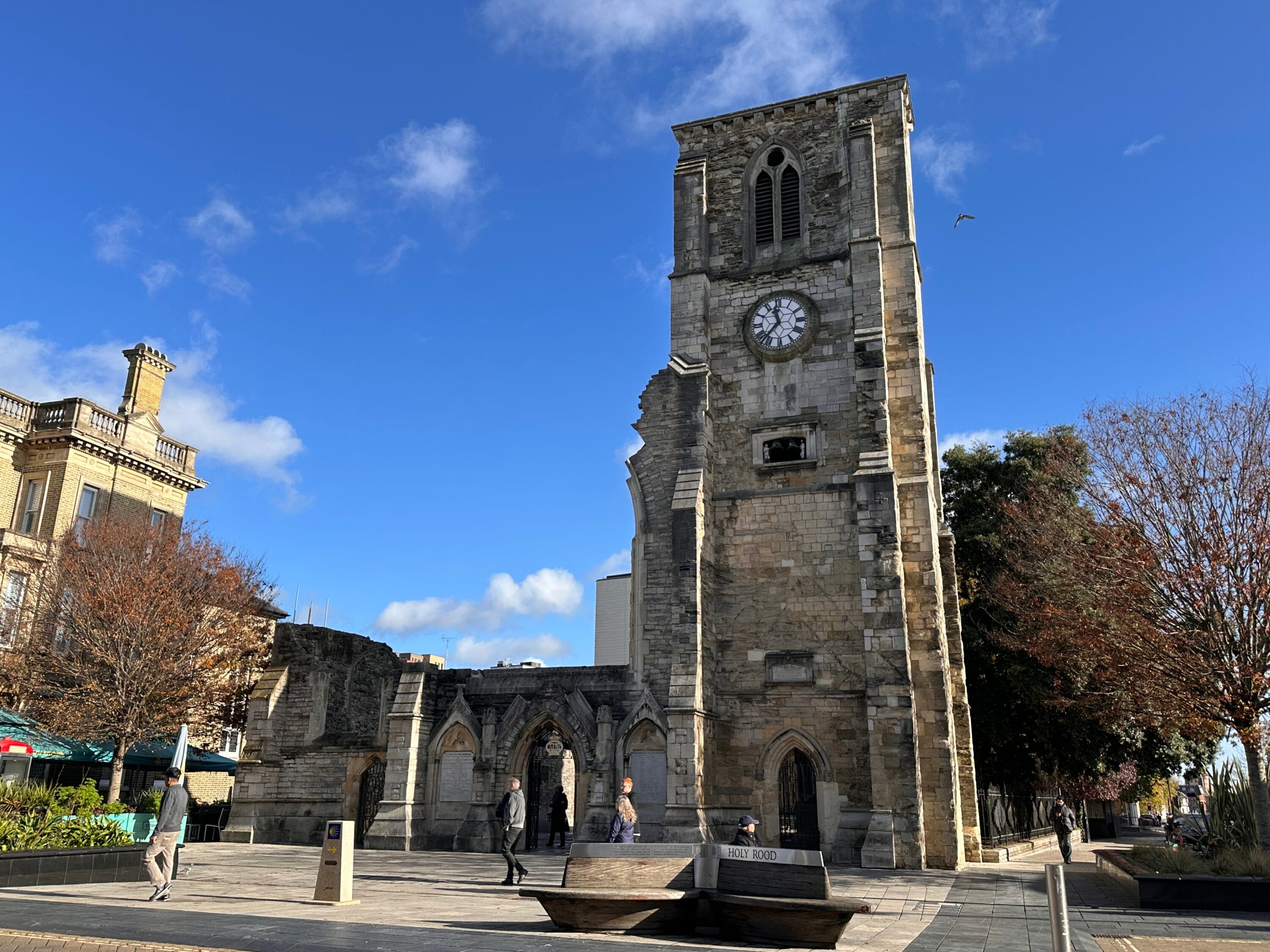
- The Historic Clock Tower: The stone tower survived the severe bombing of the 1940 Southampton Blitz and still stands proudly over the High Street, featuring a classic automated quarter-jack clock.
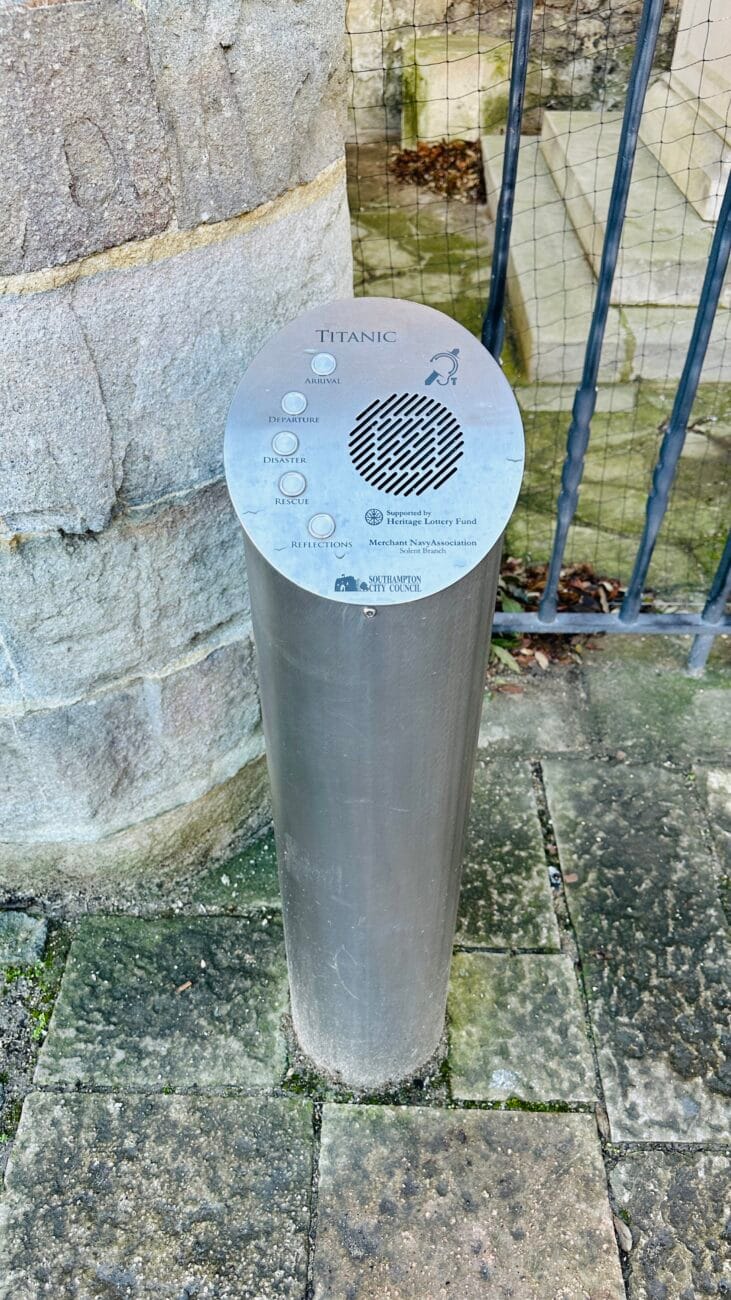
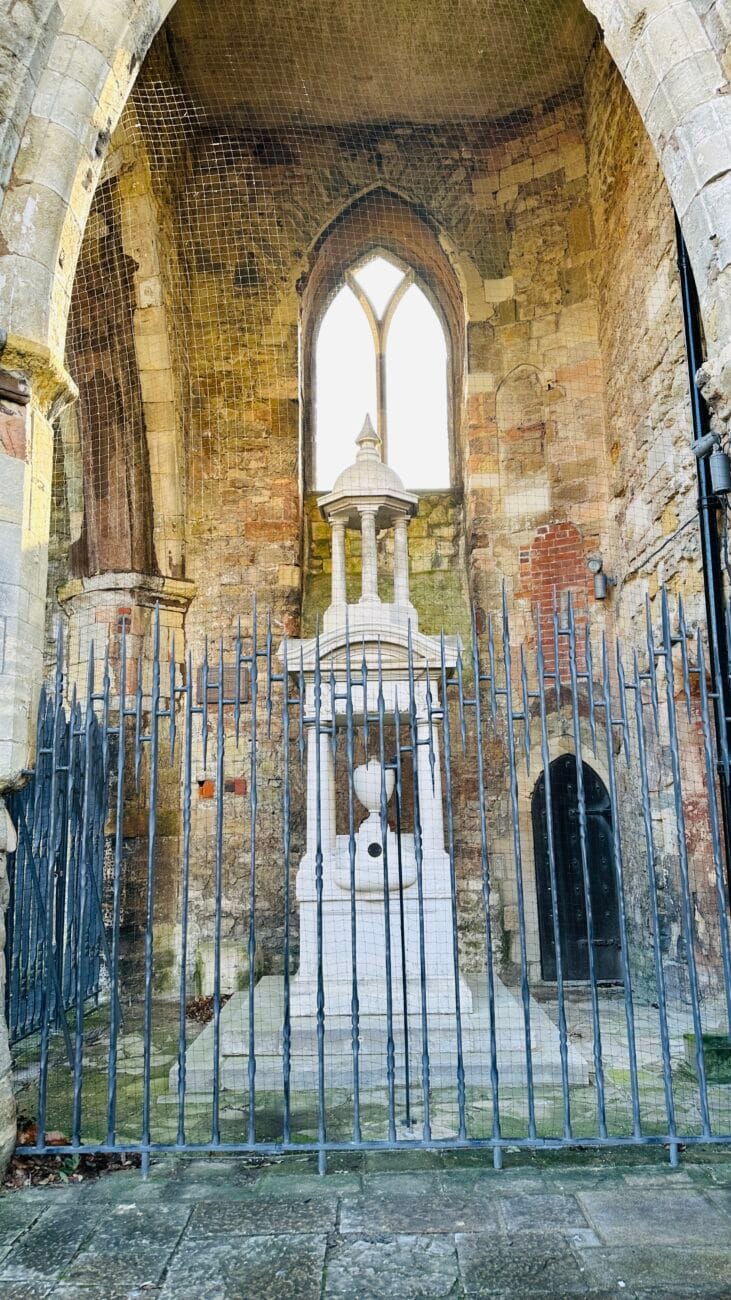
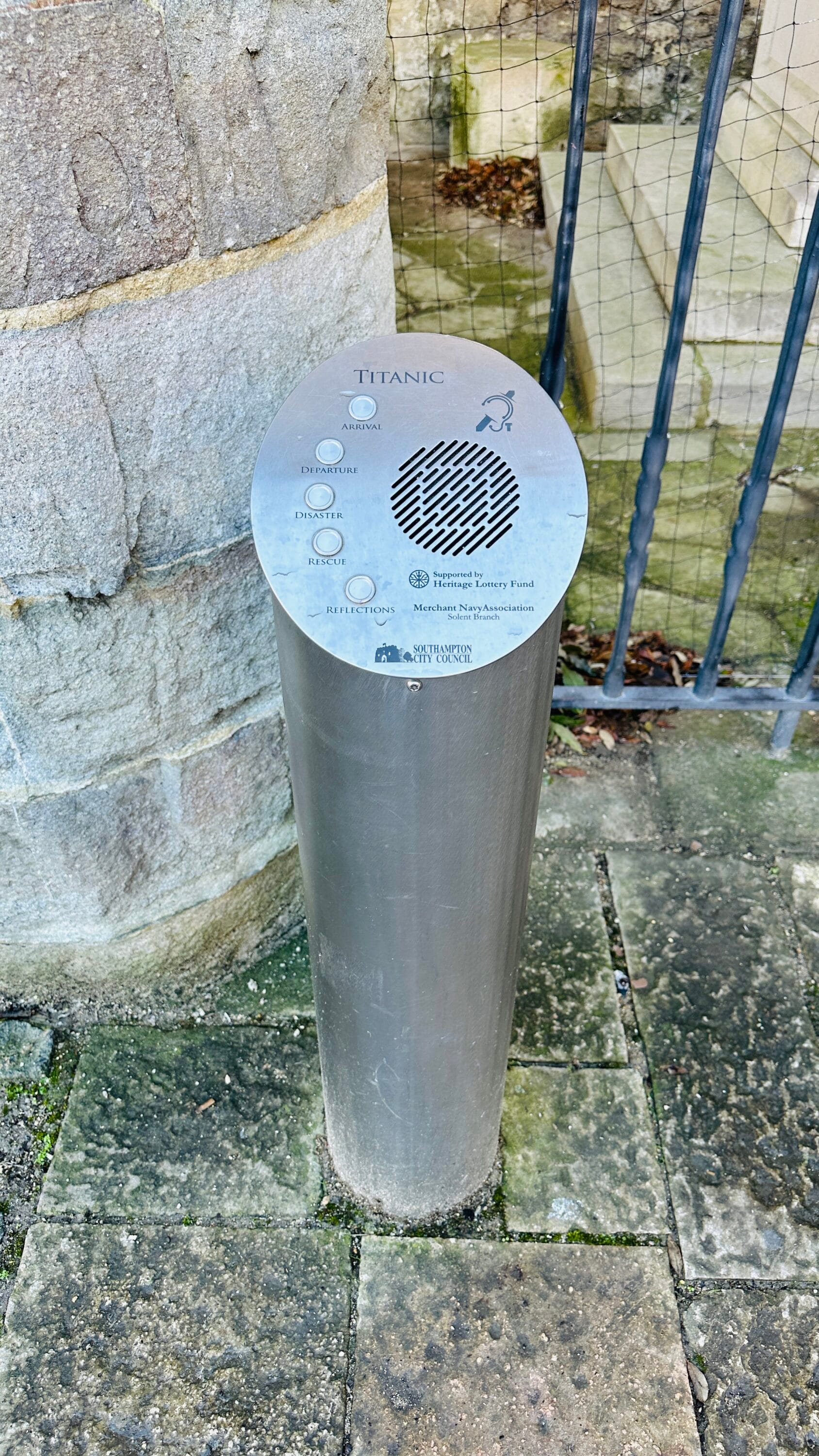
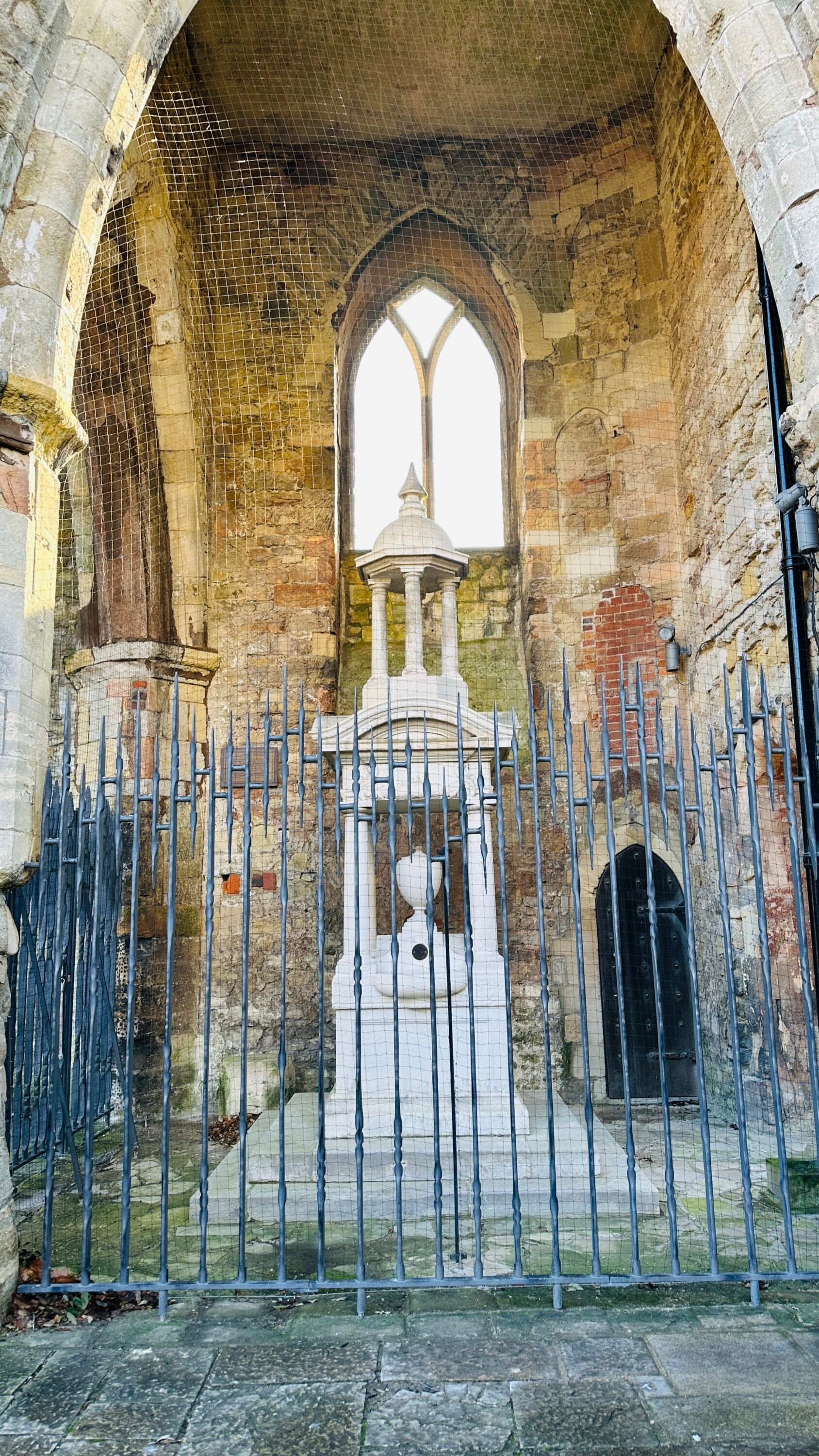
- The Titanic Crew Fountain: Hidden inside the tower base is the beautifully restored drinking fountain originally erected on the Common to honour the lost stewards and crew of the Titanic.
Highlights
- 14th-century architecture: Founded originally in 1331, making it a premier example of medieval urban craftsmanship.
- Wartime preservation: Maintained deliberately as a shell to serve as a permanent structural reminder of World War II.
- Titanic connections: Home to a unique, family-funded crew memorial fountain relocated for safekeeping.
- Central landmark: Located right on the High Street, providing effortless access during city exploration.
Tickets and Prices
Checking the entry details before visiting Holyrood Church helps you plan your day in the city centre.
- Admission: The open-air ruins and memorial grounds are completely free to enter.
- Booking: No tickets or advanced reservations are required, allowing you to walk inside freely at any time.
How Long Do You Need?
Planning your visit duration is easy since the open structure is designed for quick, independent exploration.
- 15-20 minutes for a quick visit: This provides sufficient time to walk through the nave, look at the tower, and read the primary plaques.
- 45 minutes for a standard visit: Perfect if you want to inspect individual merchant navy panels, view the Titanic fountain details, and take photographs.
- Half day when combined with Old Town attractions: Ideal if you pair the church with a broader walking tour of the nearby medieval town walls, Tudor House, and Bargate.
Is It Suitable for Families?
Taking children to Holyrood Church offers an easy, highly accessible entry point into the heritage of Southampton.
- Children: Kids find the open stone layout engaging, allowing them to miniature history without the constraints of a traditional quiet museum.
- Pushchairs: The grounds feature flat, even paving throughout the interior, making it incredibly easy to navigate with prams or double pushchairs.
- Interactive exhibits: While there are no electronic games, the clear informational display boards use text and maps to tell stories to older children.
- Family appeal: It serves as a fantastic, free educational stepping stone during a day out exploring the wider city centre.
How To Get There
If you are planning your visit to Holyrood Church Southampton, getting there is straightforward thanks to its central city centre location on the High Street. Whether you are travelling by car, train, or bus, reaching Holyrood Church from Southampton city centre is quick and convenient.
- By train: Southampton Central Station is around a 15-minute walk from the church.
- By bus: Most city centre bus routes stop right outside or near the High Street and Holyrood chambers.
- By car: Use Southampton city centre ring road and follow signs for the Waterfront or Town Quay.
Where To Park
If you are looking for parking near Holyrood Church Southampton, there are several convenient city centre car parks within walking distance of the venue.
- East Street Car Park: A close option, only a few minutes’ walk away.
- Westquay Shopping Centre Car Park: Large multi-storey car park with easy access to the High Street.
- Perma Park Car Park: Secure central option suitable for longer stays in the city.
Where To Eat Nearby
If you are searching for places to eat near Holyrood Church Southampton, you will find fantastic dining options within a short walk of the venue along the High Street.
- Ottoman Kitchen: Award-winning independent restaurant located just a brief walk away, serving exceptional, authentic charcoal-grilled Turkish dishes, mezes, and traditional hospitality.
- Indos Peri Peri: Great casual spot situated nearby for quick, flavourful flame-grilled peri peri chicken, burgers, and satisfying wraps.
- Coriander Lounge: Excellent local favourite set in a striking historic building, offering premium, authentic Indian cuisine and traditional specialities right on the High Street.
Holyrood Church FAQs
1. Do I need to buy tickets to visit Holyrood Church?
No, you do not need tickets. The monument is completely free to enter and remains open to the public as a public memorial space.
2. Is the church fully accessible for wheelchairs and pushchairs?
Yes, the entry gates and interior flooring are completely flat and level, offering easy and unrestricted physical access around the entire ruin.
3. What are the opening hours for the ruin?
The church structure is an open-air public monument that is accessible to view 24 hours a day throughout the week.
4. Can you go up inside the clock tower?
No, the interior staircase of the medieval clock tower is closed to the general public to protect the structural integrity of the stone tower.
5. Where is the Titanic memorial fountain located?
The historic crew drinking fountain is securely placed inside the sheltered ground floor base of the front clock tower.