
Whether you’re eyeing a move to the South Coast or you’re a student heading to the University of Southampton, there is one question on everyone’s lips: is Southampton expensive to live in? As someone who spends my mornings grabbing coffee in the Cultural Quarter and my weekends exploring the New Forest, I’ve seen the prices at our local haunts shift over the last year. Living here offers a unique maritime charm, but you need to know how to budget for it.
The Quick Answer
For a single professional, the average monthly cost of living in Southampton (including rent) typically ranges between £1,156 to £1,934. While it is more affordable than London or Brighton, it remains slightly higher than northern hubs like Sheffield or Newcastle.
The numbers that matter most in Southampton
1. Rent (Southampton-wide averages, not guesses)
The Office for National Statistics publishes average private rents for Southampton by bedroom count. As of December 2025, the averages were
- 1 bedroom: £861 per month
- 2 bedrooms: £1,090 per month
- 3 bedrooms: £1,326 per month
- 4+ bedrooms: £1,861 per month
- All properties average £1,231 per month
Local context: when I walk from Above Bar Street towards the parks by the Guildhall, the “pay for convenience” premium is usually about time and ease. When I am down in Ocean Village, the premium is often about lifestyle, newer buildings, and added building costs.
2. Council Tax (Southampton City Council, 2025 to 2026)
Southampton City Council publishes the full band table. For 2025 to 2026, two useful planning anchors are
- Band A: £1,510.96 per year (about £125.91 per month)
- Band B: £1,762.78 per year (about £146.90 per month)
- Band C: £2,014.61 per year (about £167.88 per month)
- Band D: £2,266.44 per year (about £188.87 per month)
Tip: ask the agent or landlord for the Council Tax band early. It is one of the quickest ways to stop “cheap rent” from turning into an expensive monthly total.
3. Energy (UK-wide price cap reference point)
For a typical dual-fuel household on a standard variable tariff paying by Direct Debit, Ofgem set the cap at £1,758 per year for 1 January to 31 March 2026 (about £146.50 per month). Your bill can be higher or lower depending on usage and property efficiency.
Local context: older flats and wind-exposed buildings can feel noticeably different in winter, especially nearer open water.
4. Water and wastewater (Southern Water guide figures)
Southern Water publishes guide costs by household size. For 4 people, it shows £1,082 per year for combined water and wastewater, or £90 per month (figures given as a guide).
Southern Water also notes that average bills change from 2026 to 2027, so always check current charges for your account type.
5. Local buses (useful anchor prices)
Bluestar lists an adult Dayrider at £4.30 (and other products vary by zone and duration). Always check the operator site for current ticket prices and zones before you build a commuting budget.
Tip: If you mostly travel in the evening, look out for Bluestar’s £1 fare after 6pm promotions or local offers. These can change, so confirm the current terms on the official Bluestar website before you rely on them.
6. Broadband and TV basics (useful household admin costs)
A UK broadband bill is commonly in the £30 to £45 per month range, depending on speed and contract terms. A UK-wide analysis from Uswitch cites an average monthly bill of £35.90 as a planning figure.
The UK government confirmed the annual TV Licence rises to £180 from 1 April 2026 (about £15 per month) via GOV.UK.
City quarters and what they do to your budget
Cultural Quarter and city centre (Guildhall, Watts Park side)
You are paying for walkability and time saved. If you can do your week on foot between Above Bar Street, the parks, and the core shopping streets, transport costs can fall sharply.
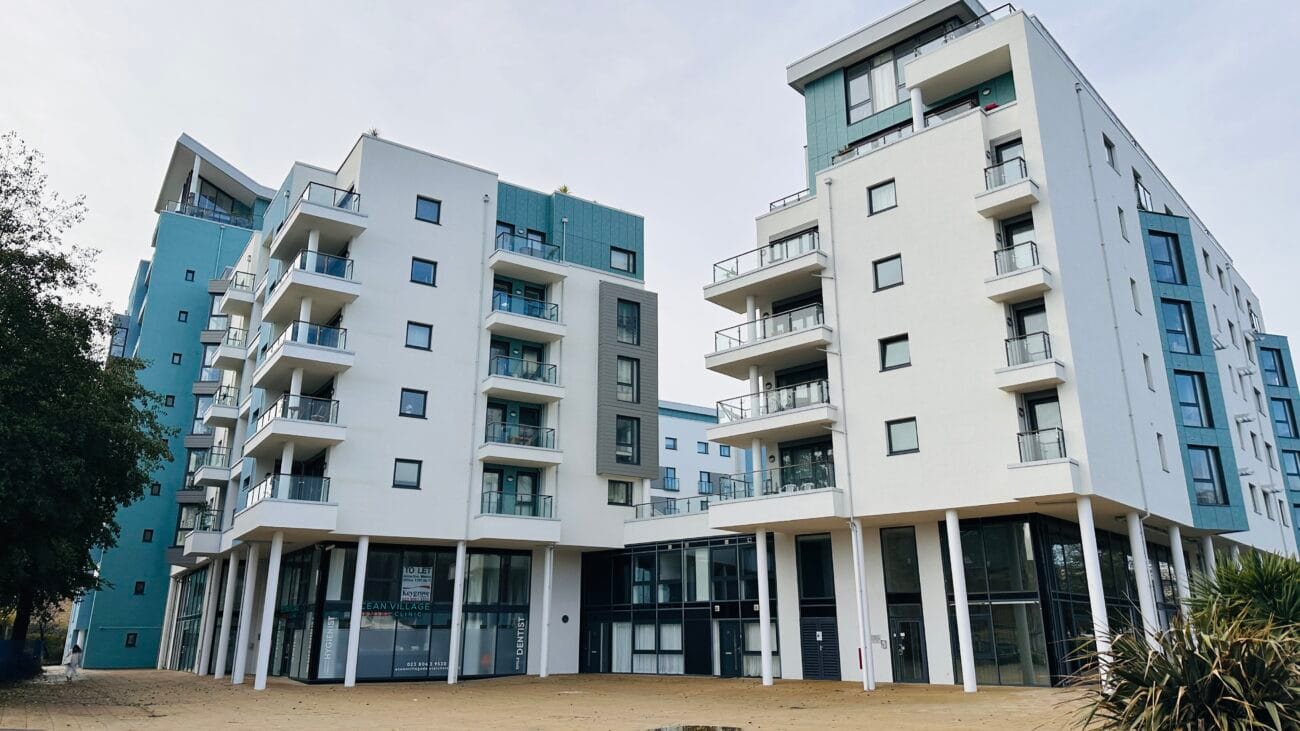
Ocean Village and waterfront living
This is where people most often underestimate fixed costs. Beyond rent, modern blocks may include ongoing building charges (varies by development), and the area encourages more “out and about” spending.
Portswood and student-adjacent areas
More buzz, more competition in some pockets. The cost question here is usually housing demand and property condition, rather than “fancy lifestyle” pricing.
Woolston and east of the river
Often a better value if you do not need to be in the centre every day. Budget impact depends on how often you cross the river for work, nights out, and errands.
Sample monthly costs in Southampton (planning ranges)
These are illustrative monthly budgets built from published anchors (ONS rents, Southampton Council Tax, Ofgem cap, Southern Water guides) plus realistic living ranges for groceries and local travel. Prices vary by household habits, building efficiency, and season.
Sample monthly budget: family of four in a 3-bed flat
| Monthly cost line | Planning range |
|---|---|
| Rent | £1,200 to £1,600 (ONS 3-bed avg £1,326) |
| Council Tax | £168 to £189 (Band C to D planning range) |
| Energy (gas + electric) | £120 to £200 (Ofgem cap anchor about £146.50 for “typical”) |
| Water and wastewater | £90 to £100 (4-person guide about £90) |
| Broadband | £30 to £45 |
| Mobile phones | £30 to £80 |
| Groceries and household shopping | £450 to £750 |
| Local transport | £60 to £180 |
| TV License | £0 to £15 |
| Estimated monthly total | £2,148 to £3,159 |
Sources: ONS rent averages, Southampton Council Tax bands, Ofgem price cap, Southern Water guide costs
Sample monthly budget: student or single in a 1-bed flat
| Monthly cost line | Planning range |
|---|---|
| Rent | £800 to £1,050 (ONS 1-bed avg £861) |
| Council Tax | £0 to £189 (students in exempt households may pay £0; otherwise bands vary) |
| Energy (gas + electric) | £70 to £140 |
| Water and wastewater | £56 to £69 (1 to 2-person guide range) |
| Broadband | £0 to £45 (often included in some student contracts; otherwise similar) |
| Mobile phones | £10 to £40 |
| Groceries | £180 to £320 |
| Local transport | £40 to £120 (bus users can anchor from Dayrider £4.30) |
| TV License | £0 to £15 |
| Estimated monthly total | £1,156 to £1,934 |
Student accommodation alternative: the University of Southampton halls list weekly fees across a wide bracket. Southampton Solent University also publishes residence fee examples. Always check the official pages for the exact residence, what is included, and the current contract length.
Practical ways locals keep costs down in Southampton
- Choose your postcode to reduce transport spending. If you can walk through the park chain from the centre instead of relying on buses daily, your monthly total often drops.
- Treat Ocean Village spending as a separate category. The area is great, but it encourages frequent small spends.
- Ask one unglamorous question at every viewing: “What is the Council Tax band, and what does the energy setup look like?” Those two answers often beat a thousand photos.
Common mistakes people make when judging the cost of living in Southampton
- Using only the all-properties rent average. Bedroom count changes the picture quickly, so use the ONS bedroom breakdown.
- Forgetting Council Tax until after agreeing on a place. Bands matter, and the totals are not minor. Use Southampton City Council to confirm band charges.
- Budgeting energy bills without thinking about the building. The Ofgem figure is an anchor, not a guarantee.
- Assuming student housing costs average out. Contract length and what is included can change the monthly effective cost. Always check the University of Southampton accommodation pages and the Solent residence fees.
- Ignoring seasonal spending. Winter utilities and holiday travel patterns can distort a “normal” month.
Find the right place for your budget.
If you want to reduce costs without reducing quality of life, your choice of neighbourhood is the lever. Read this next: Best places to live in Southampton.
1. Is Southampton expensive to live in for students?
It can be manageable if accommodation includes bills and you live near campus routes. Weekly hall fees vary by room type and contract length, so check the official pages before committing, including University of Southampton halls and Solent residence fees.
2. What is the average rent in Southampton right now?
The ONS reports an all-properties average private rent of £1,231 per month in December 2025, with £861 for one-bed and £1,326 for three-bed as local averages.
3. How much is Council Tax in Southampton?
For 2025 to 2026, totals range from £1,510.96 (Band A) up to £4,532.88 (Band H). Band C and D are £2,014.61 and £2,266.44 respectively, according to Southampton City Council.
4. Are utility bills high in Southampton?
They are mainly driven by the property. Ofgem set the cap for a typical dual-fuel household at £1,758 per year for early 2026, but real bills vary by usage and insulation.
5. Can you live in Southampton without a car to save money?
Yes, especially if you live centrally. Bus fares and products vary by zone, and Bluestar lists an adult Dayrider at £4.30 as a useful anchor, but the largest savings usually come from choosing a walkable base.